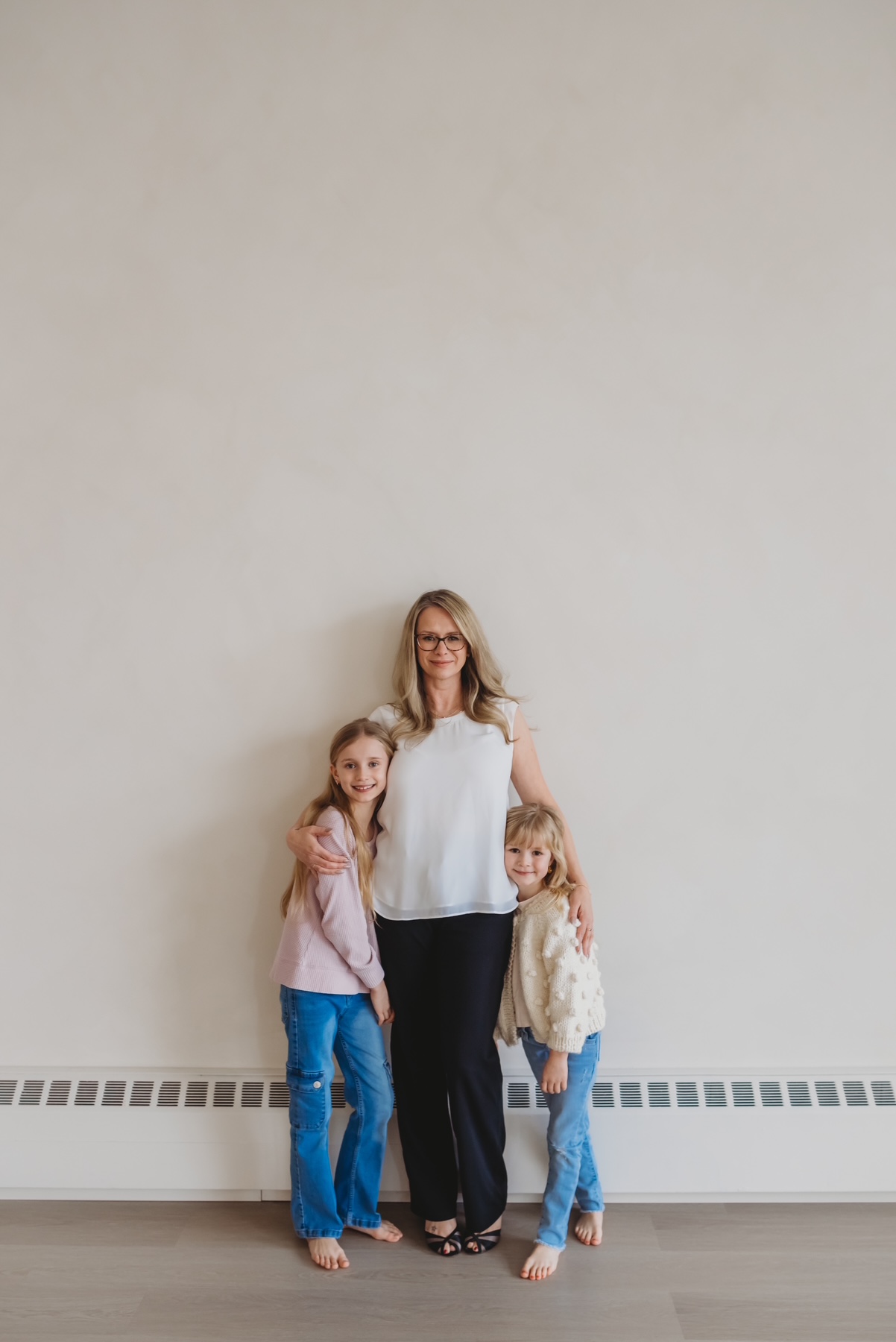
Both a counsellor and a mother. Both matter here.
Sarah knows survival mode from the inside: the version where you manage everyone else's needs while quietly running on empty. Twenty-plus years of clinical practice sit behind this work. So does the lived experience of being the one who carries it all.

Why this practice looks the way it does.
Sarah has spent more than twenty years in clinical practice, and she is a mother of two. That combination shapes everything about this work. The mental load, the guilt about resting, the sense of self that goes quiet between the roles: these aren't abstractions she read about in training. They're a reality she has lived while sitting on both sides of the room.
Her clinical foundation is unusual for a practice like this. She is an Internationally Certified Alcohol and Drug Counsellor (ICADC), with over two decades supporting people through substance use and supporting the families around them, often working alongside outpatient and inpatient treatment programs. She also carries trauma certification (ITATM), because so much of what looks like anxiety, burnout, or a coping habit turns out to have older roots. A BA in Sociology and certification in Acceptance and Commitment Therapy (ACT) round out the foundation she works from.
What that history taught her is the core belief of this practice: people don't struggle because they're weak. They struggle because their patterns, and their nervous systems, learned to survive something. Change that lasts happens at that level, and it can't be forced there by positive thinking.
This work is not about surface-level self-care or forcing yourself to “just think positive.”
Evidence-based, and chosen for you.
No single method fits every person, so sessions draw on several, blended around what you actually need that week.
ACT & CBT
The structured backbone. CBT works with the thought patterns that feed anxiety and depression; ACT reconnects you with what you value, so change has a direction and not just a symptom list.
Somatic & polyvagal-informed
Body-based work for what talk can't reach: breathwork, grounding, and nervous-system regulation that help a body in survival mode learn it's safe to stand down.
Trauma-informed
Working with painful experiences without being retraumatized by them. Gaining control over how the past affects you today, at a pace your system can handle.
Mindfulness & root-cause
Practical attention skills for the always-on mind, and a consistent focus on why the patterns formed, so the work changes the engine, not just the noise.
Substance use, and the families around it.
Very few therapists carry real, certified training in substance use. Sarah does, and it changes what this practice can hold. Alcohol and drug use, the questioning stage, the return from treatment, the partner or parent keeping a household upright through someone else's struggle: all of it belongs here.
If this is your situation, there's a dedicated page for this work: substance use counselling & family support.
- ICADC certified. Internationally certified training in alcohol and drug counselling, held by few general therapists.
- Alongside treatment. Counselling coordinated before, during, and after outpatient or inpatient programs.
- Family support. Dedicated space for the people who love someone in the middle of it.
Warm, direct, and practical.
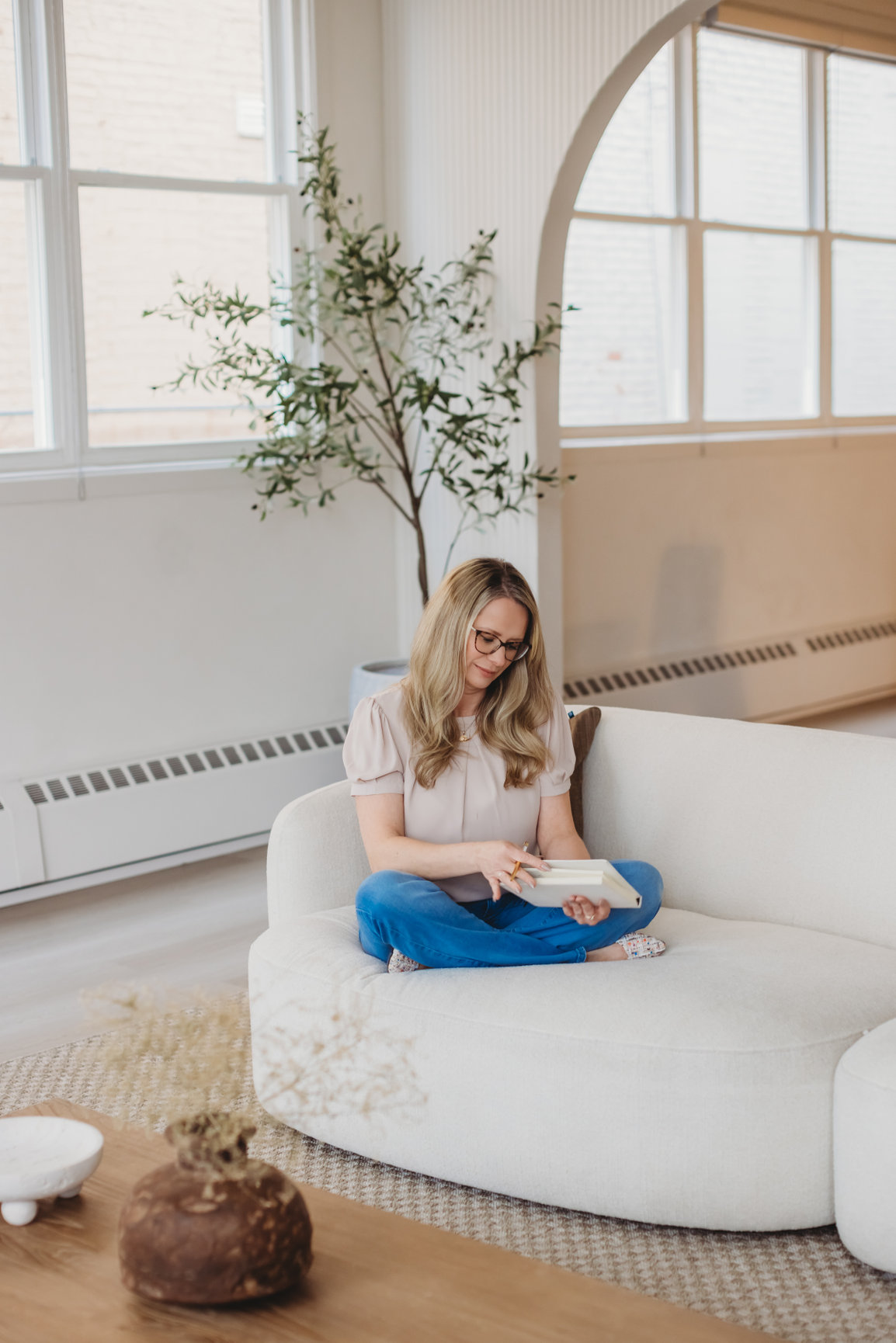
Expect a real conversation, not a clinical interview. Sarah is warm and she is direct: she'll validate what's true and gently challenge what isn't serving you. Sessions are 50 minutes, in person at the Lake Street office in St. Catharines or over secure video anywhere in Ontario.
Most weeks you'll leave with something concrete: a regulation practice, a pattern to watch for, one boundary to try. And the work is reviewed together as it goes, so you always know what you're working on and why.
- ACT
- CBT
- Somatic-based
- Trauma-informed
- Mindfulness
- Polyvagal-informed
Straightforward fees, and a free first conversation.
- In-person session
- $150 / session
- Virtual session
- $100 / session
- Free 15-minute consultation
- $0
Sliding scale available. Cost shouldn't be the reason you keep carrying this alone. Sliding-scale spots are available for qualifying clients.
Book your free consultationA 24-hour cancellation policy applies to booked sessions.
I have thoroughly enjoyed working with Sarah. Whenever I have needed her assistance she is always willing to help.
Jennifer · Client
About the approach, answered plainly.
What is a first session actually like?
Slower and more human than people expect. We talk about what's been happening, what you've already tried, and what you want to be different. No forms read aloud at you, no lying on a couch, no pressure to unpack everything at once. You set the pace; Sarah keeps the direction.
What do all the credentials mean?
BA is her undergraduate degree. ICADC is the Internationally Certified Alcohol and Drug Counsellor credential: certified training and supervised experience in substance use counselling. ITATM is her trauma certification. Underneath the letters: over twenty years of clinical practice with high-achieving women, moms, and families.
What does 'somatic' or 'polyvagal-informed' actually mean in a session?
It means the body is part of the conversation. Stress and trauma live in the nervous system, not just in thoughts, so sessions can include breathwork, grounding, and noticing what your body is doing while you talk. It's practical, not mystical, and nothing happens without your consent and understanding.
Will I be given homework?
Usually something small, yes: a regulation practice to try, a pattern to notice, one boundary to experiment with. The point of therapy isn't the 50 minutes; it's the week around it. But the homework bends to your real life. A sick-kid week is a sick-kid week, and the work adjusts.
Is this therapy or coaching?
Therapy. Coaching is future-focused and action-oriented, and it's a fine tool for people who are fundamentally steady and want momentum. This work goes deeper: healing the root causes, the patterns and the nervous system underneath. One honest question makes the difference clear: am I looking for healing, or for progress? If it's healing, you're in the right place.
The approach, in her own words.
Somatic Therapy: How Your Body Holds Stress
Stress and trauma are stored in the body. What body-based therapy looks like, and who it helps.
Read the article TraumaTrauma Therapy in St. Catharines
Healing from trauma is not about forgetting the past. It's about learning to live fully in the present.
Read the article Anxiety · MotherhoodWhy High-Achieving Moms Feel So Overwhelmed, and How to Calm Anxiety Naturally
Her flagship piece on the always-on mind, and three questions that interrupt the spiral.
Read the articleStart with a conversation, not a commitment.
No pressure, no obligation: a quiet 15 minutes to see if this feels like the right fit. Reach out, and let's make it happen.
Therapy is not crisis care. If you or someone you love is in immediate danger, call 9-1-1 or go to your nearest emergency department. For 24/7 mental-health crisis support anywhere in Canada, call or text 9-8-8.